Wednesday, October 31, 2007

OXY Part Five

So here is the final installment of the Oxy series from the London Free Press.

I think for a "small" town paper that the series was fine but I think as a whole London needs to start realistically looking at this issue if the stats that they reported are actually accurate.

On a personal note, I don't really have a lot to report. I am doing well both physically and mentally. Am thinking of dropping my methadone dose by 5ml next week as I've been on my current dose of 80ml for close to a year now and am able to go more than a day and a half without feeling badly. I think that it is time.

Tuesday, October 30, 2007

Part Four of Oxycontin Series

Here is the next part of the London Free Press's series on oxycodone.


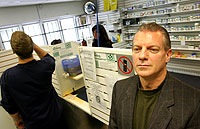
image This is the clinic that I attend. The male in the photo is Dr Craven who was my first doctor when I initially started. I had to switch to another doctor though when I started my new job this past May as his hours of practice were not working well with my work hours. He was a fantastic doctor none the less, but believe it or not, my current doctor is even better! We're lucky here in London as most of the doctors associated with the clinic are fantastic.


Monday, October 29, 2007

Part Three of Oxycontin Series


Here is the third part of the series that my local paper is running on oxycontin.


London Free Press - Local News - Oxycodone


Oxycodone
In Clinic 528, addicts are treated with methadone, Free Press reporter Randy Richmond writes in the third of a five-part series on abuse.
By
RANDY RICHMOND

Early morning and a steady path of people make their way to the counter.

Each one stops and takes a sip from a small, plastic medicine cup.

In each cup is methadone, a narcotic you also can buy off the street.

In Clinic 528 on Dundas Street, the methadone is legal.

In here, fire is being used to fight fire, one opioid drug handed out to battle others --plastic cup after plastic cup after plastic cup.

"I remember us thinking maybe we would end up with 350 people here," says Dr. John Craven, associate director of Clinic 528.

It opened on Dundas Street five years ago, after doctors running a smaller clinic and private methadone treatment practices realized the need was growing. Back then, in 2001, the doctors had 120 patients with 80 on a waiting list.

"About three years after opening, I thought things would plateau," Craven says.

"But everybody coming in, still to this day, tells us they know half a dozen other people out there."

About five to seven new people a week come in for treatment, he says. Now there's about 850 in treatment in London and another 180 at Clinic 461 in Woodstock.

More than 80 per cent of clients are addicted to opiate drugs prescribed through doctor's offices, Craven says. The most common are the oxycodone-based drugs, Percocet and OxyContin being the most popular brands.

Methadone replaces those drugs, but comes, supporters say, with a much lower price.

Methadone basically fools the brain into thinking it's getting a far more interesting and powerful opioid than it is, Craven says.

"Methadone is the most boring drug on the face of the earth," he says. "It is useful because it is a lousy drug. It fills up the brain receptors and doesn't do much of anything else. It stops people from going into withdrawal.

By all accounts, the physical withdrawal from opioid painkillers is a nightmare.

That physical dependence starts when the brain becomes used to an opioid. The drug changes the brain's chemistry so it demands more each day to obtain relief or euphoria.

When the drug is taken away, the brain and body rebel. "I would sneeze until I felt like my head would blow off," one told the Free Press.

"You get the runs. You would be on the toilet forever. You feel nauseous. You feel like you want to throw up. You get achy."

A factory worker named Steve, 39, says he tried twice to go through counselling at Addictions Services of Thames Valley, the central outpatient service for addicts in the region.

"I just couldn't do it, cold turkey," Steve says. "I felt like my feet and my hands were going to pop off my body."

He has a good family that he neglected more and more during the two years he was addicted to OxyContin. He spent all his savings on the drugs, lost a girlfriend and gave up his social life. Of all things, it was the repo man that turned him around.

"I had bought a new car and they repossessed it. I woke up one day and my car was gone. I thought, what am I doing?"

His elderly mother drove him to his first appointment last year. Imagine, Steve says, making your mom take you to a methadone clinic because you are an addict. He got clean in 12 days. After a year, he has a new girlfriend and is playing sports again.

"I don't want to say it saved my life. But if I wasn't here, I don't know where I'd be."

Not everyone sees Clinic 528 in such a positive light.

Provincial Conservative Leader John Tory, accompanied by police Chief Murray Faulkner, took a law-and-order tour of London last year and called for the clinic to be moved because it is close to Beal secondary school.

That prompted several London leaders to criticize the clinic's location and the work it does. But the city itself runs a coffeehouse two doors east at William Street that attracts a rough-edged crowd.

Dozens of dealers, users, those trying to kick and other down-and-outers mill on the sidewalk between the clinic and coffee house.

In the middle of the day, you can get several offers to purchase drugs on the sidewalk.

Homeless people make up about seven per cent of Clinic 528's patients, Craven says. Another 15 per cent are "one pay cheque away" from homelessness. The rest are working or in school or homemakers.

In the downstairs waiting area, though, a constant flow of rougher-looking patients come in each day for their methadone.

That's because 'downstairs' is where beginners and long-time addicts who can't get clean get their methadone.

Once someone tests clean for everything but methadone, they move 'upstairs.'

That means they can get 'carries' -- several days worth of methadone at once, and get individual counselling from one of three doctors.

"All I do is prescribe methadone, get them in the door, get their feet on ground, then try to educate them on how they got in this mess in the first place and how to get out of it," Craven says.

A third of his patients are upstairs, a third downstairs trying to get upstairs. "And one third are determined to kill themselves through their addiction," he says.

---

Upstairs and downstairs patients can meet twice a week in group recovery sessions. Mondays they talk about what they want. Thursdays they listen to a short recording by Craven and mostly stick to that subject.

There are rules here. No interruptions. First names only. A few veterans talk at a recent session about some other rules they'd like to see. No nodding off during session. No opening a bottle of pills for an aspirin.

"How do they know those aren't my triggers,?" says one in exasperation.

At this session, they talk about honesty. A regular member, a woman in her 30s, fidgets in her chair. She tells the group she feels ashamed because she trusted a friend and the friend lied.

"Why do you feel ashamed? It's your friend who should feel ashamed," a group member says.

"I'm embarrassed because I want to help people but I can't because I am not recovered yet," the woman says.

"You can't give what you don't have," Craven tells the group. "You have to help yourself first."

Another group member tells them, "My conscience is working overtime now."

That's normal, because during addiction, you can't get emotional about what you do, Craven tells them.

"Don't beat yourself up," a veteran of the clinic says.

---

After the meeting, the veteran says he's been on methadone for seven years.

There are no deadlines to getting off, Craven says. Only after a year on a regular dosage should anyone even try to taper the amount, he says.

Opioids change the brain chemically and feed a growing hunger of fears, worries, past abuses and guilt.

That is one criticism of methadone treatment: It replaces one addiction with another.

Even those on it worry.

Tom, 34, an out-of-work furniture installer, used to drive by Clinic 528.

Why don't these people just quit? he wondered.

He signed up in February 2006. Three years earlier he hurt his back at work, then spent years battling an addiction to OxyContin. "I tried to quit on my own. It was debilitating. I looked down on these people until it was me."

His daughter saved him. Her grades were failing and she was getting into trouble at school. "I had to get the pills out of my life or I was going to lose my daughter. I think I just barely got away."

It took him six months to move upstairs because he continues to smoke marijuana.

Ironically, the same thing that keeps some people away from the clinic was the thing that made him strong enough to get clean and move up.

"There are some pretty hard tales and some pretty hurting people downstairs," Tom says. "It inspires me to get better."

It took him a year to get his energy back and only now has he begun to call up old friends he left during the addiction years. He's even thinking about going back to work.

"The past year I was content to have not much money. It helped me quit."

It's been a while since he had a craving for the drugs.

"I had a lot of dreams about it that are really where you are going and scoring and going home and doing it. Right now, I don't think I will ever go back. I don't want to ever go back to where I feel that low about myself."

There's just one worry.

"The methadone is a really good painkiller so I wonder how long I am going to be on it. When I am off, I don't know how much of my pain will return."

GLOSSARY

- Opioid: Drug made from the opium in poppy. Commonly called narcotics or opiates. They are effective painkillers, but can also produce euphoria, making them prone to abuse.

- Oxycodone: An opioid and key ingredient in prescription painkillers such as Percocet, Oxycet, Endocet and OxyContin.

Oxycodone can create addiction and physical dependence.

- Percocet: Contains 5 mg of oxycodone and gives about five hours pain relief. On the street, "percs" refers to both Percocet and generic forms of the drug.

- OxyContin: Contains higher levels of oxycodone, usually 10 mg to 80 mg. It has a time-release coating offering pain relief for 12 hours. Chewed, crushed and snorted, or injected, the time release is bypassed and all the oxycodone is released at once.

- Addiction: When a drug is so central to thoughts, emotions and activities the need to continue its use becomes a compulsion.

- Physical dependence: The body has adapted to the presence of the drug, and withdrawal symptoms occur if use is reduced or stopped.

- How they work: Opioids bind to brain receptors, and over time block those receptors. That forces the brain to require more opioid to produce the same euphoria.


Sunday, October 28, 2007

Whats The Story, Morning Glory?

Remember in high school whenever you had to study for that all important exam? What was the first thing that you did in order to prepare yourself for this? If you were, and still are, anything like me then the first thing that you tended to do was anything but study. I’ll never, ever forget how suddenly even the most mundane of chores somehow managed to become mythical in proportion, waiting ever so patiently until they had my undivided attention. Over the years not much in regards to my procrastination skills have managed to change.

Now instead of school, I generally have work related projects competing for my ever diminishing attention span. It seems that whenever I sit down to my computer to complete one of the many never ending stream of projects that the Property Manager keeps sending my way, I find myself very easily distracted away from the task at hand. Like some pathetic sort of sycophantic fan, each day I am compelled to check out one of the many entertainment type gossip blogs. My morning simply can’t start until I’ve managed to get a wee taste of celebrity dirt. I mean, I have to be looking good when held up against comparison, say, to Ms Spear’s current foibles, etc

Now, if I may take the time to wonder aloud how it is possible that she has found herself in this recent set of misdeeds and misadventures. I thought that these type of people generally paid good money to certain types of employees to ensure that this type of stuff stayed very much in the background not front and centre of the public stage. And seriously, how badly messed up are you to allow things to reach this point? I mean even Kurt Cobain and Courtney Love, who in a strictly legal sense, lost custody of their newborn for her first three months and technically had to surrender their physical custody of her, all four of them - including Frances’ first nanny - managed to live under the same roof this entire time.

Come on Britney, give your head a very serious shake. If two of the most notorious heroin users were capable of successfully pulling this off, you at the very least could at least make a little bit of an effort to show up for your custody hearings and actually show up on time. My guess would be that this would strengthen your case significantly. Certainly passing a drug test here and there wouldn’t hurt either. Also, what kind of drugs is this chick on anyway that she has allowed herself to become this unglued?

I’ll be the first to admit that the entire drug landscape has most definitely change a lot over the past decade. No where do I find this very apparent then witnessing this change each and every day at my methadone clinic. The general demographic of the typical methadone patient has undergone quite the change here in London, Ontario, Canada from the first time that I started MMT in the summer of 1999 - in fact, in less than a ten year time period.

The number of patients actually at the clinic who are on MMT is 800 compared to the 162 patients back in 1999. Typically, the current wait time to start treatment works out to approx two and a half weeks, whereas the first time, I ended up having to wait almost three months. I ended up lucking out getting in at that time simply because there had been a cancellation on their waitlist. If not for that cancellation, I would have ended up waiting four months before I would have been able to even start MMT. From my experience, when a junkie finally reaches out and starts asking for help, being put on someone’s waitlist is not any kind of solution but rather, an additional problem.

In the years between each MMT, the opiate landscape in this city changed so that what I remember from a decade ago, no longer exists today. While talking to my doctor recently, he mentioned of the 800 patients currently on methadone at the clinic barely a handful had ever seen heroin. Or almost 780 patients - out of 800 - being treated with methadone, were not, by exact definition, heroin addicts. Yes, they were opiate addicts because each and every one of them had issues with narcotic analgesics, but they certainly could not be easily lumped into society’s usual perception of the dirty, disgusting junkie.

Of course, in the end, this is all just semantics. Obviously, the growth of the clinic here in London, Ontario these past tens years is a result of a number of factors occurring simultaneously. Obviously, there is a growing need for this type of facility and from the perspective of a business plan, a need which if operated properly, will also prove to be financially rewarding for any investors i.e. the doctors that decided to expand their much smaller clinic from the previous decade into a clinic requiring considerably more support staff, etc.

Now a clinic of its current size will definitely be much more noticed by John T Public because depending on its location, the influx of nearly 1000 individuals that for the most part walk to the beat of a different drummer would hardly be invisible. Not many would be thrilled to have this particular group doing not much more than loitering near their homes or business each and every day. If it were just the patients of the clinic that the neighborhood had to be concerned about then that would be one thing but inevitably, it is the baggage that accompanies each of these patients that ends up being the biggest concern as generally they have less to lose.

Now if most of the opiate addicts in London, Ontario are not addicted to heroin, what the heck are they doing then? Apparently the majority are hooked hardcore on oxycontin. Or at least so says the five part series that our local paper, the London Free Press, started running in yesterday’s paper. This special report plans on covering all aspects of this addiction and how it is affecting our community as well as what we as a community can and should do to help.

The article from today focused on how oxycontin was doing much more than killing pain for two men while yesterday the series shared the story of one young housewife and mother of two’s battle with this drug.

Following is the introduction article to the series which was written by London Free Press reporter, Randy Richmond, that you should be able to read in its original form here. There was a second article regarding pharmacists and how they feel caught in the middle.


Oxy, part 1


Oxy, Oxygen, M&Ms, 80s, Oxycotton.

Killer.

The drug sweeping London’s downtown streets, workplaces and suburbs goes by many nicknames.

But it has one effect on police, civic officials, social service and health-care workers, users and those dealing in drug subculture -- alarm.

And it’s ravaging London like few other cities in the province, police say.

A $3.7-million, five-year plan to combat substance abuse will be unveiled at city hall Monday.

"It is the drug of this city right now," said Sgt. David MacDonald, head of one of the police’s two street drug units.

The opioid called oxycodone is so powerful, so easy to get and so hard to kick, it’s fueling crime, ravaging the vulnerable, and turning ordinary middle-class citizens into sellers and buyers.

What makes it tough to tackle is the source. It’s not made in makeshift labs, grown in basements or shipped in from other countries. Most comes from London doctors’ offices, then gets ’diverted’ to the underworld.

Signs of its rise are everywhere:

  • OxyContin, the most popular oxycodone based painkiller, is the most commonly injected drug among needle users in London, recently surpassing heroin.
  • Opioid abuse is rising to one of the top three problems cited by people seeking help at Addiction Services of Thames Valley. In most areas, it is tied with or nearing crack, cocaine and cannabis.
  • In Ingersoll, opioid abuse ranks behind only alcohol, traditionally the No. 1 cited problem among people getting outpatient counselling.
  • The Children’s Aid Society of Middlesex London is seeing more and more parents hooked on OxyContin and other painkillers.
  • In 2004, only 86 police occurrences, such as break-ins and thefts, could be identified as fueled mainly by oxycodone addiction.

By 2006, the number of police occurrences had jumped to 261.

- OxyContin is the drug of choice -- supplanting crack --among sex-trade workers in London, police say, and 100 per cent of the about 80 women working in the sex trade use drugs.

The diversion and rising influence of oxycodone-based prescription drugs is one of the forces prompting the city’s community services boss, Ross Fair, to present a plan to politicians to attack substance abuse in London. The five-year plan rests on four foundations -- improvements in prevention, harm reduction, treatment and enforcement.

Only a large-scale co-ordinated effort will work, Ross says. "Addiction is a big hairy beast."

The city would pay a third of the $3.7-million price tag, the rest coming from Ottawa and Queen’s Park.

The plan would target the most vulnerable first: the homeless, sex-trade workers, street youth.

Key points include:

  • Create a downtown street outreach initiative, with nurses and addiction workers.
  • Expand existing safe haven drop-in programs, such as Mission Services, My Sisters Place, Centre of Hope and AtLohsa, so full day and evening service is available
  • Push senior levels of government for more treatment, and wait-time standards.
  • Increase London police so the force can focus on illegal activities associated with drug dealing and prostitution.

The strategy also has clear targets:

  • Reduce the number of sex- trade workers 50 per cent in three years
  • Cut to zero the number of overdose deaths among homeless.
  • Increase the number of homeless in addiction programs by 200 over five years.

Monday, October 22, 2007

Methadone

I was having an awful time trying to edit my previous entry so I basically said bugger to it all and decided at the rate that I was going, I might as well just start a second entry concerning my recent site recommendation. Just seemed to be the faster solution. May I say that often times I find the Blogger editor that we use for our entries rather irritating and arbitrary. Whatever. This particular entry spoke to me specifically on many levels.

Prior to me starting back on MMT, I was hooked hardcore to dilaudids and just for me to maintain at a reasonable level, I required at least ten 8mg pills on a daily basis. This certainly doesn't mean that I got them everyday because even at this level, the best price one could hope for was $100 which actually meant for us $200 - there were two active addicts involved in all of this insanity after all. While we did manage to come close most days, at our worst we were still spending on average approx $2600 monthly.

I could have practically written this piece myself the similarities are so eerie. Again I encourage everyone to visit this site. This entry and the previous one will be cross posted to The Write Thought as well - hopefully some time tonight but absolutely tomorrow.

methadone


When I get up in the morning, I don’t grab a coffee. I go to the fridge for my 100 ml bottle of methadone. After that my day is just like yours. But I wasn’t always like this. Life was a lot harder, a lot rougher. Every morning I would be sick as / like a dog. I’d crush up a couple of 8mg Dilaudid tablets and boil them in a spoon, then I’d fill a syringe. Tie my arm off and plunge the cure into my arm. And then I was good for … 3 or 4 hours. Wash, rinse, repeat. I couldn’t work.

Dilaudid is illegal unless your Dr. [gives you] a prescription. With a few phone calls you can get them for about $20 each. I used at least 10 a day. 10 to keep the sickness at bay, 10 to 20 more if I wanted to get high, and usually, I did if I had the money. It’s not easy to come up with $500/day for pills/medicine, but its gotta be done - or else the sickness – it’s always there. As soon as the pills begin to wear off, its banging at the door. Cramps, chills, sweats, diarrhea, the shits, nausea, chronic anxiety, insomnia – that’s just the beginning. Soon comes hallucinations and deliria, and unimaginable suffering. It all goes away if you take another pill, just one more. Then there’s methadone, a synthetic opiate, if you can get it. In most cities it’s easy, but not quite so in Charlottetown.

For @ 5 years my life revolves around Dilaudid and Oxycontone, percocil, morphine, codeine, etc. If I had money and pills were available, everything was fine. But I wasn’t always fine. I can’t count how many days I’ve lost to the sickness, how many times I’ve been to the treatment center. And a waste of time that was. They’d give you 2 or 3 mild sedatives a day for 3 days and then try to put you in god’s hands. It didn’t work – after the week, or 2, or 3, was over, I could suffer no longer. Straight to the dealer. It doesn’t help to tell me “everythings gonna be all right. You’ll feel better tomorrow”. Anybody who says / tells you that doesn’t know what this drug is about (why I take it).

But I had always heard about the mainland, where they gave you this drug, methadone, that took away the suffering and made you feel normal, not high, just normal, like I used to be … yeah, like it used to be, I miss those days.

I did the drugs for 5 or 6 years, but and I sat by and watched, as friends and acquaintances died one after another, month by month, because they couldn’t get the help they needed. I’m sure the doctor (at Detox) noticed too, but it didn’t matter [since] we are / they were expendable. But I couldn’t stop. I couldn’t handle the sickness. The detox couldn’t help. They didn’t have a clue. They would have nothing to do with methadone (methadone is addictive. You have to take it every dad or you get sick just like with the drugs, but it’s prescribed to you, you can have ready access to it. You never have to be sick again, you don’t get high on it, but you can live an ordinary life, like anyone else.

Finally, I scraped up some money, packed up my bags, and left for Alberta. All I had was a change of clothes, $500,and enough pills to last me 3 days, it was a gamble, nothing was lined up / set up - I was on my own.

But it worked out. Before 48 hours were up, I was in a doctor’s office getting a prescription for methadone. It was such a relief, such a good feeling. No more days spent looking for drug dealers, no more searching for a private place to inject my drugs, and no more waking up sick – I was human again. I got a job, an apartment, a car, and a normal life.

But I always wanted to come home again. I have children in PEI. What good am I to them if I am 3000 miles away? A few years went by, and I became used to feeling normal again and not needing drugs. I had seen on the internet that PEI was starting a methadone program. This year I came home. It was great. I missed PEI. I could see my kids, my family, my friends every day and I wasn’t sick all the time like I used to be. It was different now. Better. It seemed too good to be true.

It was. Sure I could get methadone now and I felt good … physically – but mentally? When I go to the pharmacy, I don’t go to the counter like anybody else, I go around the back, into the office, where no one can see me. I don’t feel different, but I am. The pharmacists are ashamed of me, or ashamed for me. Does it make a difference? I began to understand / grasp what life must be like for a black person, or these days, an arab, from their perspective. I don’t like it.

And things have changed at the treatment centre. They now have a methadone program – but they still don’t understand – they don’t get it. I came / went there with a perfect record from my doctor in Alberta. I gave urine tests every month, and never once did I fail only once in 4 years. I thought I had proven myself but no. It starts slowly, but within 3 months, for some reason, I realize that I am not like other people. I’m a drug addict, a junkie. I don’t feel like one now, but at the Detox, it is clear that is how they see me. I am a liar, a cheat, a thief, a dirtbag, scum of the earth. I know I’m clean and sober, with the help of methadone, but that doesn’t seem to matter – I’m a liar, a cheat, a thief. I must be if I’m on methadone. In PEI, it seems that only thieves, cheats and liars use methadone. In the rest of Canada, there are factory workers, plumbers and carpenters on meth[adone], as well as lawyers, and even doctors taking methadone!

But, my god, it is different here. I hate myself for having to do this. It didn’t bother me in Alberta, there I was treated like anyone else, but here, no. I’m walking on eggshells every time I go to the pharmacy, or the doctor, especially the doctor, I don’t know what to expect. On one day, I was asked twice for urine tests. Apparently, they thought that as soon as I gave the first sample, I was going to go and get some drugs. I live in constant suspicion and fear, even though I have done no wrong. Its just that I didn’t realize I was a cheat, a liar and a thief and as such I must be closely monitored. I am not on drugs, but they think I am. All drug users, past or present, are liars, cheats and thieves – that’s just how it is in PEI. They’re going to get me, to catch me, it doesn’t matter that I’m not doing anything wrong. It’s who I am I’m a thief, a liar and a cheat…

Check This Site Out! NOW!

I found this amazing site this evening while testing out a new search extension that I had just downloaded and installed to Firefox. I was randomly inputting various searches regarding the topic heroin. The site that I found is entitled mereggie, a.k.a. me, reggie macdonald a true story and its description reads mereggie, the sad true story of reggie macdonald of souris, pei, canada who lived life in the fast lane, involvement with / drug addiction, and subsequent disappearance.

His family is still searching for him or at the very least, hoping for his safe return to them. What he left behind is an unbelievable amount of his personal writings and what we have apparently lost is an incredible talent and voice that for now has been silenced. I've barely touched the surface of this site myself. The only thing preventing me from reading further is my desperate need for sleep at the moment. I dare anyone who visits this site to willingly look away.


mereggie is the true story of Reggie Macdonald.


In early December 2005, Reggie left home, while under the apparent effect of crystal meth and disappeared, and despite a country wide search could not be found.

Reggie led a troubled life dealing with drug addiction and the lingering effects on his personal and professional life. Shortly after he disappeared, his family found hundreds of pages of his writings which shed light on his struggles. Reggie had hoped to become a writer and that his life story would have a positive impact on someone, and so with this site, we present his writings.

Read the writing called Methadone, which describes the awful existence of a heroin addict on methadone. If this doesn't want to make you avoid drugs, then I am surprised. For more harrowing tales that might lead one to avoid drugs, read the Iceland, Kidnapped! and other readings.

If you are intrigued, read on - you can start with Reg's intro to his story .... more details will be added over the next few months ...

NOTE:
While Reg was very articulate and a very good writer, at times his perspective is very harsh, most likely affected by his addiction. We hope that his writings are viewed in that context, as the views Reg often expressed are not the views of his family.